Placement for Employment or Continuing Education (From 2022 Survey Respondents)
Typical Starting Salary
> 90% Pass Rate on the Fundamentals of Engineering Exam (National Avg ~ 78%)
LSSU currently has several student engineering and technology-related student organizations, often which are student chapters of professional engineering organizations:
We are also a member of the Order of the Engineer, Link #190, and hold an annual ring ceremony in April. For more information, contact (Mrs.) Becca (Kilponen) in the School office.
The “Engineering House” Living Learning Community — Chippewa Hall — provides additional opportunities for student mentoring, access to technology, and novel field engineering-related field trips through affiliation with the Engineering Society of Detroit (ESD).
Learn more about LSSU’s living learning communities here. A 360 degree tour is also available.
Deadlines
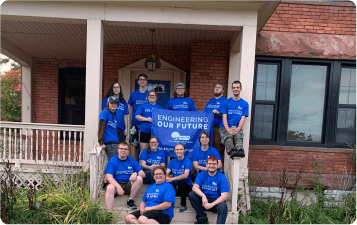
In addition to university-wide scholarship, there are specific scholarships for certain engineering majors, FIRST Robotics participants, etc. Please click on the button below to find more information at our LSSU Engineering Scholarships webpage.
We have had a 100% success rate of students entering the workforce or being accepted to graduate school. Various companies visit our campus specifically looking for LSSU graduates.
You’ll find our LSSU graduates at companies including:
LSSU graduates have received their post-graduate degrees from universities such as:
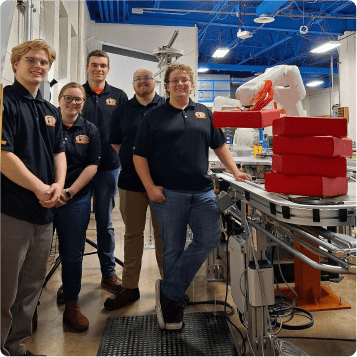
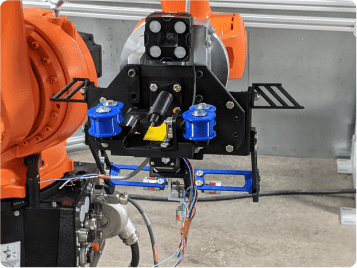
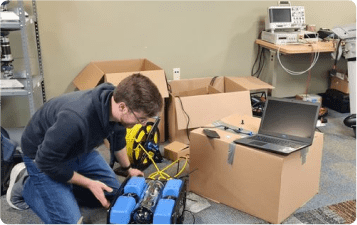
Senior Projects…more than just theory
All engineering students are required to participate in a senior project sequence, where you will grow both professionally and personally as you work with professionals in the field.
During a typical senior project, you’ll develop your technical and communication skills, manage budgets, and work with practicing engineers. The senior project experience is designed to give you the tools you need to be prepared for “real life” and allow you to be successful in your career. The primary capstone experience is:
Other project experiences can include:
There are many benefits of sponsoring a Senior Project at LSSU. These include:
To sponsor a project, there is a Project Application Form which can be obtained by emailing the Chair of the Senior Projects Faculty Board Dr. Masoud Zarepoor or calling 906-635-2660. There is also a Project Intent Form if you are unsure if you project is a good fit. You can submit the form and we can discuss it in more detail and provide feedback.
Brochure PDFs from past projects are available for download:
If so, please click on the following links for more information:
For more information, contact the Admissions Office or (Mrs.) Becca (Kilponen) in the School office.