Lake Superior State University
 
Related Sites


Alum Success

Nancy (Braschayko) McNamara, a summa cum laude Laker Alumni from 2006 is attending the University of Michigan School of Medicine.

Biology

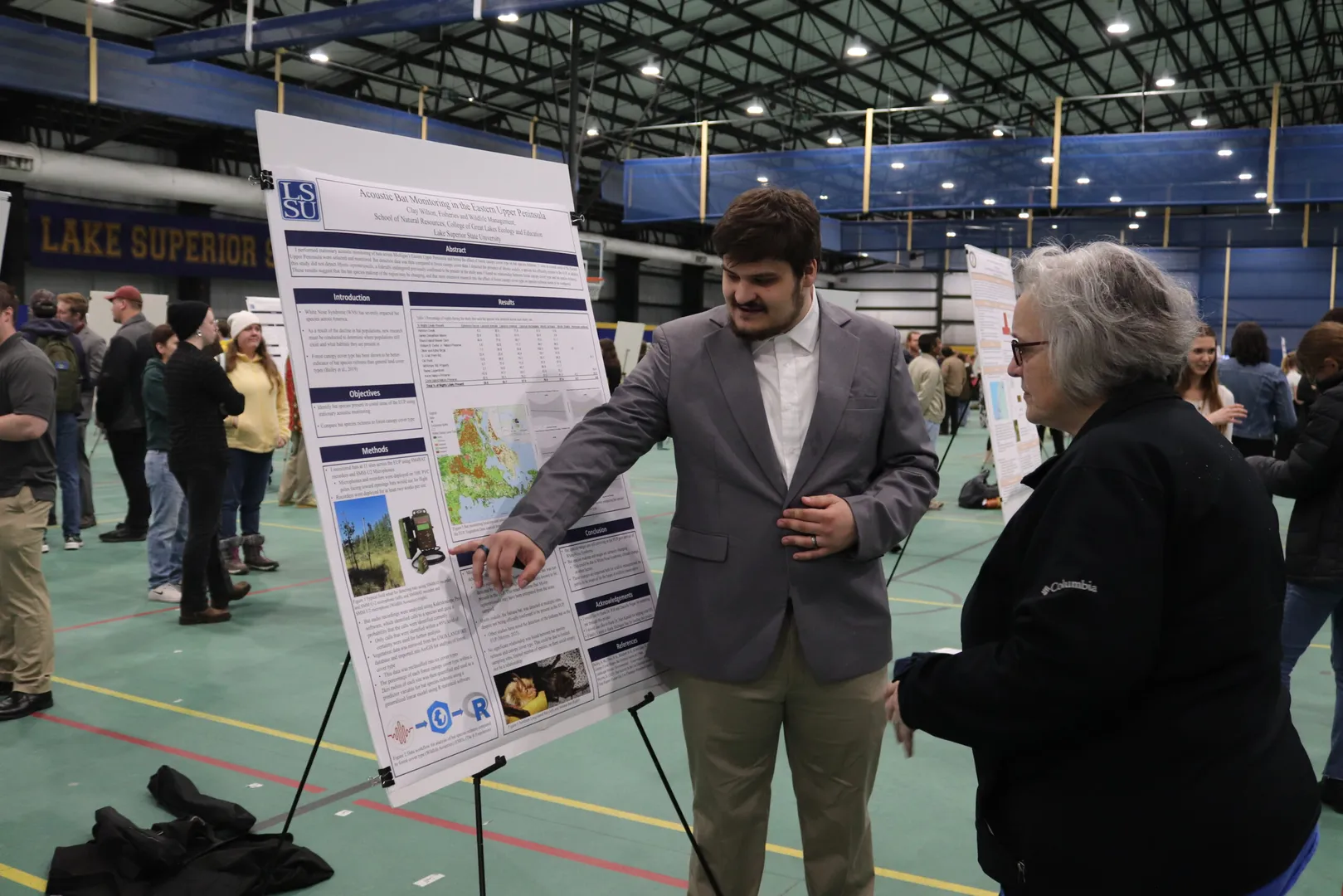
LSSU biology students hard at work

Biology is a great field of study and Lake Superior State University is a great place to study it. Whether you’re interested in natural resources ecology, human biology, clinical lab sciences, genetics, anatomy, physiology, plants, animals, microbes, indoor or outdoor biology, our program offers a number of unique advantages for undergraduate students.   "Serious Work by Serious Students"

Excel in Biology
 
Degrees

Our biology program provides an excellent background for student who want to work in biomedical sciences (physician, dentist, pharmacist, optometrist, etc.), field ecology, laboratory work or many other areas. It features a sound footing in concepts and theory across the biological sciences along with lots of hands-on experiences in lab and in the field. It’s a flexible program that lets you select the specific classes that best suit your interests and needs. Students in the BS Biology program complete a senior thesis research project and a university approved minor.

Additional Programs

  • B.S. Conservation Biology
    New Programs

    B.A. Conservation Leadership

    The practice of conservation embodies a philosophy of living sustainably on our planet. It is a proactive response to the challenges we face as 21st century stewards of our natural resources. Formulating solutions to wide ranging and complex challenges such as climate change, species extinctions, invasive species, water shortages, deforestation, and desertification will require professionals who have training in not only ecology but equally important in the social and economic sciences.

    Two new programs, the BS in Conservation Biology and BA in Conservation Leadership, in the Department of Biological Sciences at Lake Superior State University are designed to provide that training.

    The BS in Conservation Biology and BA in Conservation Leadership build upon the strengths of our natural resource programs at LSSU. Our selection of rigorous field based courses in watersheds, soils, forestry, ecology (general, fish, wildlife or plant), organisms (mammalogy, ornithology, ichthyology, or entomology) offers an unparalleled set of foundational courses in the natural sciences. Combining this coursework with interdisciplinary courses in social dimensions, political science, sociology, business/economics, communication and GIS technology adds the breadth needed to integrate biological, economic, and policy issues in the formulation of sustainable solutions. Conservation Leadership adds additional courses in communications which prepare students to advocate for and communicate these solutions to the broader communities.

    The programs include a capstone professional experience in which students practice the skills necessary to develop solutions to real-world problems outside the university.

    We invite students with a passion for stewardship of our natural resources and the desire to make a difference to apply for these programs.

    Career Options: Students graduating from this program are qualified for positions in conservancies, land trusts, community based environmental planning and advocacy organizations, government agencies, and environmental/sustainability programs within businesses. The program also prepares students to pursue advanced degrees in areas such as environmental policy and sustainability.

    These Positions Include:
    Outreach specialist: Educates members of the public about specific environmental issues
    Project staff: Works in the field on specific conservation projects
    Stewardship staff: Manages specific conservation sites, such as land conservancies or watershed associations
    Development staff: Builds financial resources for conservation work through grant-writing and fundraising
    Writer/Media specialist: Provides environmental information via print or electronic media
    Field Coordinator: Builds networks of volunteers to carry out environmental projects and outreach
    Government Liaison: Keeps politicians informed about environmental issues
    Director: Manages projects or offices focusing on environmental issues and/or sustainability

  • Pre-Professional studies (e.g., “Pre-Med”, "Pre-Pharmacy")
    Our biology program is an excellent way to prepare for entry into Medical School, Dental School, Veterinary School, Optometry School, Pharmacy School, and other professional studies programs. Biology students work with a pre-professional advisor to select the classes that best suit their needs while providing a well-rounded Biology degree. We have a good record of placing students in top-ranked professional schools.

  • B.A. Biology
    The Bachelor of Arts option is designed for students who want a more flexible program that would be suited for careers in biologically oriented businesses, as a tech writer, or in other situations that require a more general but perhaps less technical background. The B.A.degree requires 8 credits in a single foreign language.


  • B.S. Clinical Laboratory Sciences
    Our Clinical Lab Sciences program provides an excellent background for students who want to work in a medical support setting such as analyzing blood samples in a hospital or clinic. Students in the BS Clinical Lab Science Program complete a year-long internship at an approved medical facility.

  • B.S. Biology/Secondary Teacher Education
    Our biology program qualifies students to become high school biology teachers.
New Discovery!

Lake Superior State University's BIOL337 ecology class poses with an unexpected find they made along a Sault Ste. Marie, Mich., public hiking trail. Professor Greg Zimmerman discovered the "Himalayan Touch-Me-Not" after his class conducted a biomass sweep through the city's Minneapolis Woods area. Students subsequently pulled all of the plants they could find as a service project. Zimmerman hastens to add that the illegal alien should not be confused with the region's "Spotted Touch-Me-Not" or "Jewelweed," a perfectly welcome native plant.
Lake Superior State University's Biology 337 ecology class poses with an unexpected find they made along a Sault Ste. Marie, Michigan, public hiking trail. Professor Greg Zimmerman discovered the "Himalayan Touch-Me-Not" after his class conducted a biomass sweep through the city's Minneapolis Woods area. Students subsequently pulled all of the plants they could find as a service project. Zimmerman hastens to add that the illegal alien should not be confused with the region's "Spotted Touch-Me-Not" or "Jewelweed," a perfectly welcome native plant.


See also:

Have a Question?

Your Name:
Your Email:
Question:


Veterinarians

Is LSSU a good place to begin training as a veterinarian?

"Our pre-professional advisor knows all the ins and outs of applying to all the professional schools and provides excellent advice for that. Our pre-professional society (the student group for pre-professional students) is very active in ways that helps students enhance thier applications to professional schools. We have had a number of our students go on to vet school, last year our two applicants into vet school ended up going to Michigan State University and Purdue. This year of the six students that applied to professional schools, all six got it. But i want to emphasize that it's up to each individual student to gain the experience they need to have the best chance of success in veterinary or any other professional school. Our program helps, but it's up to the individual student. Our small classes, our individualized attention, our academically rigourous programs, our collaborative atmosphere, our senior thesis program all can help you prepare yourself for application to professional schools."

--Gregory Zimmerman, PhD
Professor and Department Head

Turning reed canary grass into fuel

Justin Wilson

The multi-phase project, led by biology department head Gregory Zimmerman Ph.D. with help from Justin Wilson, the project's student volunteer, is studying the potential of reed canary grass pellets as an environmentally friendly and economical heating fuel, as well as a possible economic stimulant for the Eastern Upper Peninsula. [ more ]

Apply Today!

Home > Biology > Welcome