
Welcome to the Chemistry Department
Program Overview
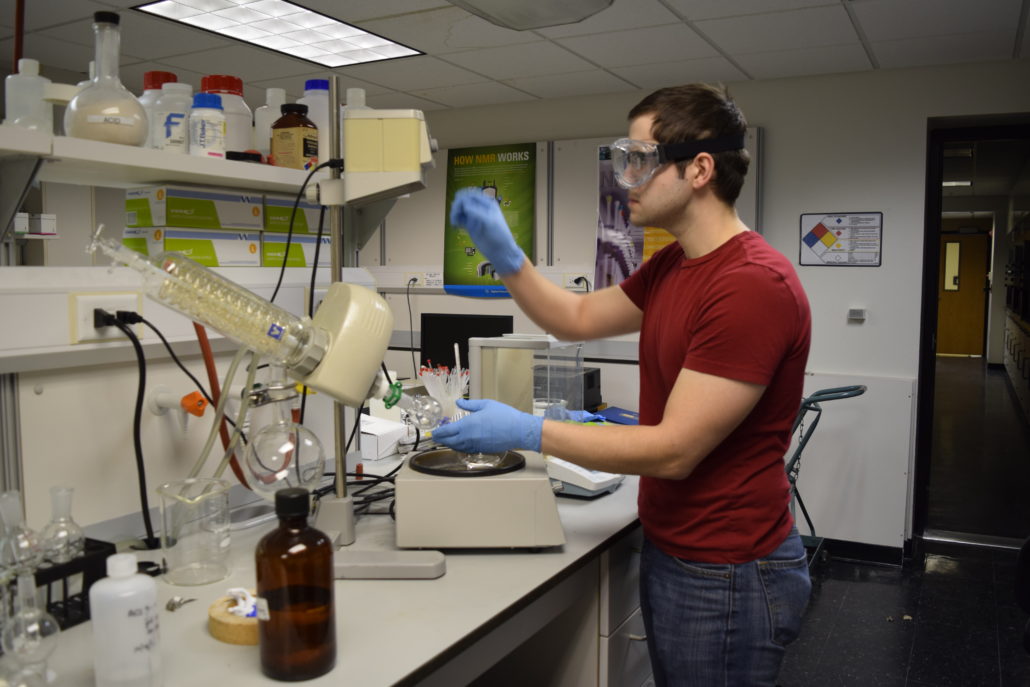
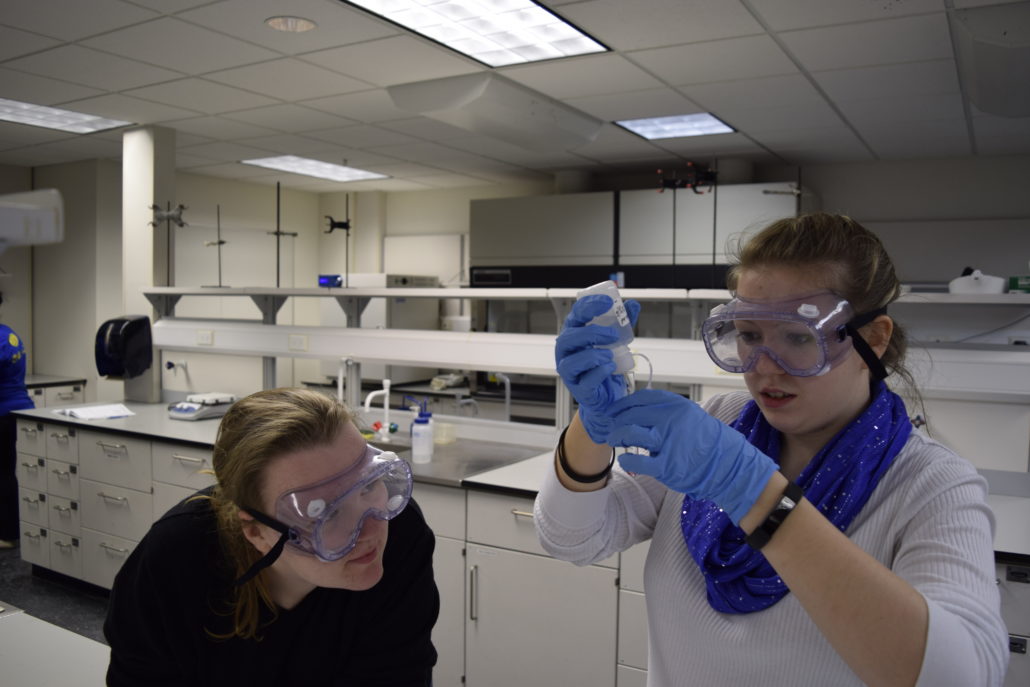
The Chemistry Department at LSSU offers our undergraduate students hands-on laboratory opportunities. Students can choose to specialize in ACS-accredited Chemistry, Biochemistry, Forensic Chemistry or Chemistry-Secondary Education. Our undergraduates examine how chemistry impacts every day life while preparing students for the job market, graduate school or professional programs.
The school of Physical Sciences is comprised of the Department of Chemistry and Environmental Sciences and the Department of Geology and Physics.
Our Mission and Vision
The School prepares physical and environmental scientists to address regional, state, national, and global problems. This is accomplished as we:
- Provide students with a sound foundation in the fundamentals of their selected scientific discipline
- Provide students with up-to-date research knowledge in their scientific discipline
- Provide students with opportunities to demonstrate growth and achievement in their selected scientific discipline
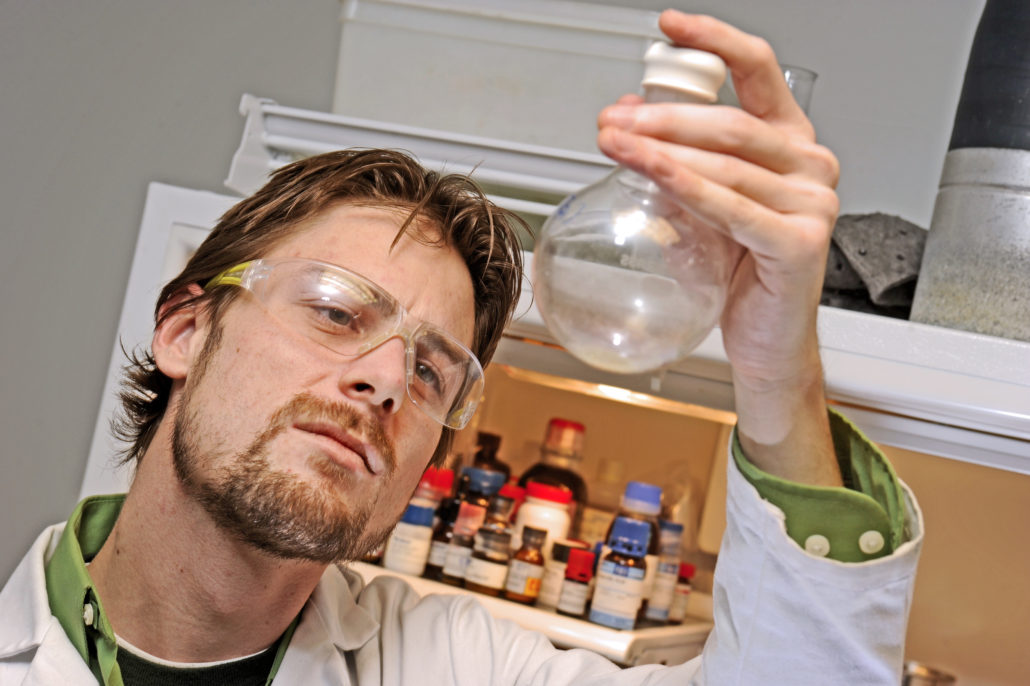
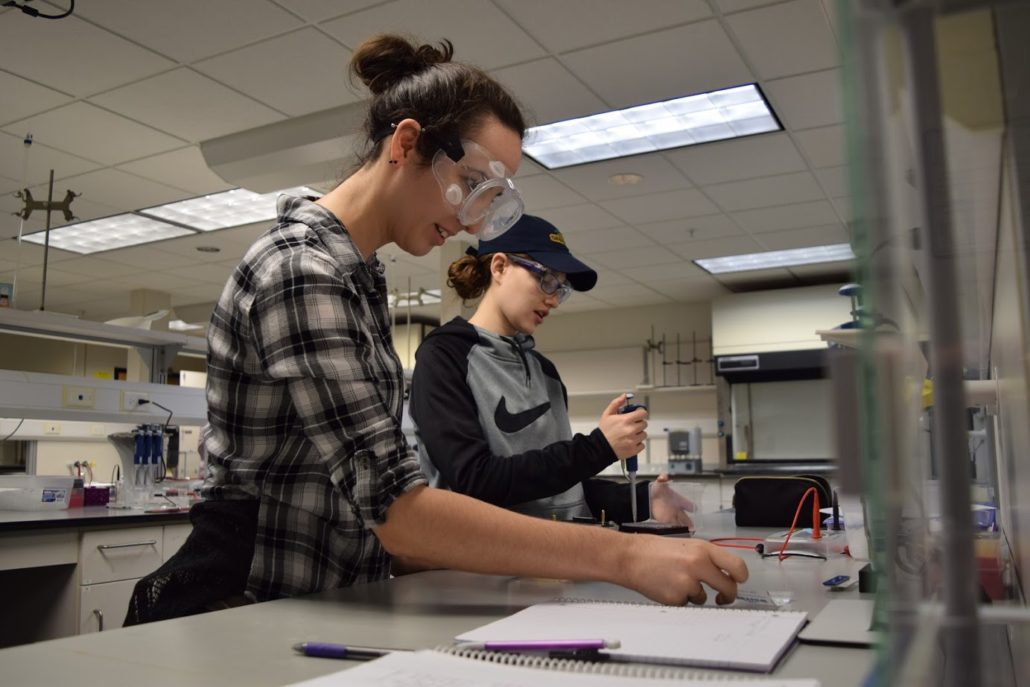
Why Study Chemistry at LSSU?
- Small class sizes (upper level classes typically have 6-15 students)
- Faculty and undergraduate research, supporting several research students each year and summer
- Close faculty-student interactions
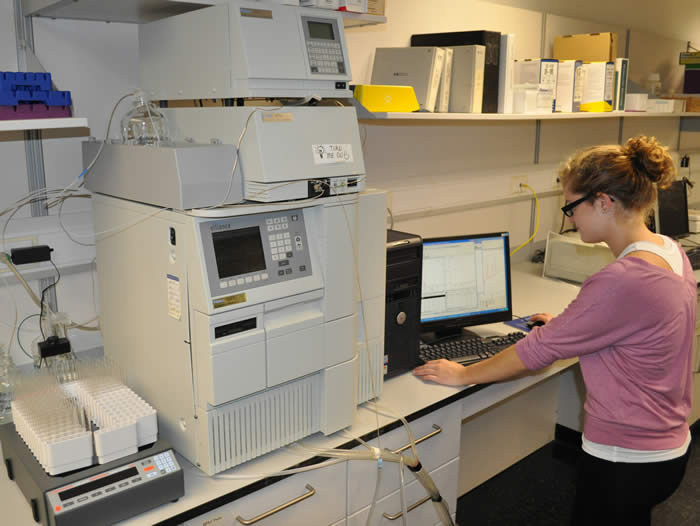
- Modern instrumentation and facilities, rivaling larger institutions in the region
$84,680
Median salary for chemist (Bureau of Labor and Statistics)
> 90%
Placement
> 30%
of graduates continue on to professional or graduate programs
Undergraduate Research
All of our seniors have the opportunity to conduct a capstone research project on an area of interest to them and relevance to their professional focus. Students work closely with a faculty mentor to design a project, conduct their research, and analyze their results. Each senior presents a poster at a Friday forum, and a short talk at our Research Symposium.
Learning Beyond the Classroom
Join the Chemistry & Environmental Sciences Club
- Meets weekly in Huron Hall
- Engages students in social, professional, and service activities
- Provides opportunities for networking/presenting at conferences
- Volunteering for environmental cleanups and monitoring
- For information on the Chemistry & Environmental Sciences club, visit their Facebook Page!
Living Learning community
- Live in historic Huron Hall with other Chemistry and Environmental Science students
- Conveniently located to the library and Crawford Hall
- Features large bedrooms, full kitchen, study lounge, projector
- Contact Professor Southwell for more info
Bachelors Major Degree Requirements
Associates Major Degree Audits
Minor Degree Audits
Chemistry related links
- SciFinder
- SciFinder Registration
- SciFinder Off campus access
- Safety Data Sheets
- American Chemical Society
- Chemistry Degree Audit forms
- LSSU periodic table
- Chemistry Advising
- Chemistry Electronic Journals
- Scholarship Opportunities for Chemistry Majors
- Graduate Schools
- Chemistry Departments
- Michigan Guidance on CBD Industrial HEMP
- Here is more information on planning for graduate school.
 Career Paths
Following the completion of their bachelors degrees, many of our students choose to pursue a graduate degree (M.S. or Ph.D.), which is often required for a career in chemistry or environmental research. Our students have an excellent record of admission into some of the top graduate programs in the country. A faculty advisor will help you to select a program and prepare your application materials, and maximize your chance at being admitted to your program of choice.
Other students graduate from LSSU and go directly into the workforce. Our graduates work for a variety of federal, state/provincial, and local government agencies, industry, private consulting, and education institutions.
Graduate and Professional Schools:
- Michigan State University
- Ferris State University
- Wayne State University
- University of Pittsburgh
- University of Minnesota
- Iowa State University
- Indiana University
- Purdue University
- Lewis University
- University of Arizona
- University of Oregon
- Ball State University
- University of Wisconsin at Madison
- University of Wisconsin at Milwaukee
- Clarkson University
- Texas A & M University
- University of Illinois at Chicago
- University of Pisa International
- Northwestern Health Sciences University
- MIT
- University of California at Berkeley
- Johns Hopkins University
- The Ohio State University
Jobs at various companies / institutions:
- Cambium Analytical
- Wayne State University
- SOS Analytical
- Spectrum Health
- Bristol Meyers Squibb
- Ice Mountain Water
- MPI Research
- Beaumont Hospital
- Michigan Blood
- City of Detroit
- Indianapolis-Marion County Forensic Services Agency
- American Institute of Toxicology
- Ontario Ministry of Natural Resources and Forestry
- Nestle
- Neogen
- Grand Rapids Police Department
- Texas Department of Public Safety
- Latent Print Unit Michigan State Police Grayling
- Breckenridge Pharmaceutical, Inc
- City of Midland
- Mark Anthony Brewing
- Fisheries and Oceans Canada
- Protein Science Corporation
- Northeast Laboratory Services
- Carroll County Health Department
- Eurofins Lancaster Laboratories
- Perrigo
Chemistry Research By Faculty
Below is a list of our faculty members accompanied by their professional interests and research projects. Faculty recruit undergraduates to assist them with research in the laboratory. Students interested in graduate programs or pre-professional programs are encouraged to find a faculty research adviser to gain experience in the lab. Research is funded internally and externally.
Here are some research highlights regarding the faculty:
- Faculty have over $2.5 million in current research funding between LSSU and their collaborators
- Faculty collaborate with other universities and corporations
- Faculty have authored publications including those with undergraduate co-authors
- Faculty and students have given several presentations at conferences in the last 12 months
- The Cannabis Center of Excellence finished instrumentation installation
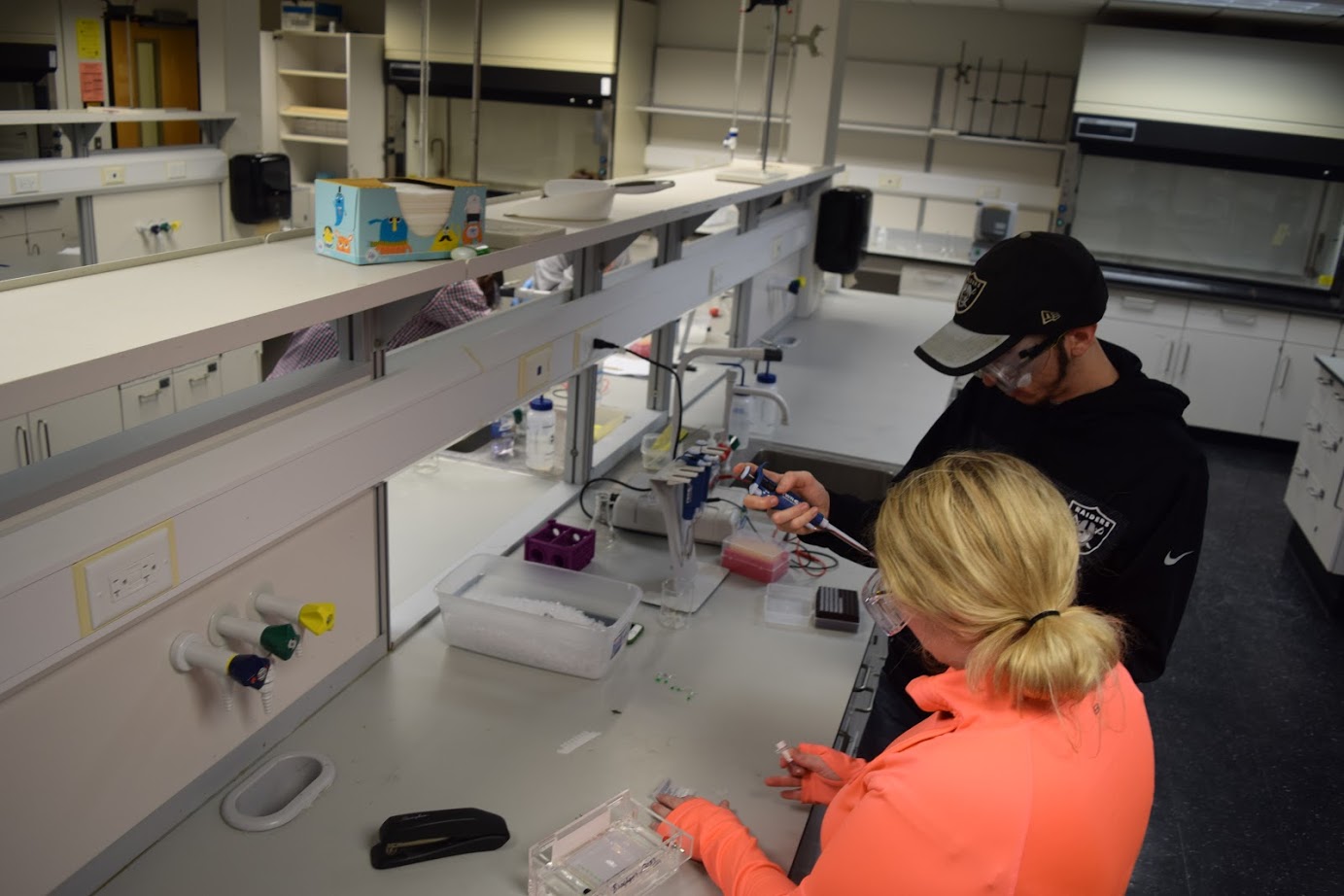
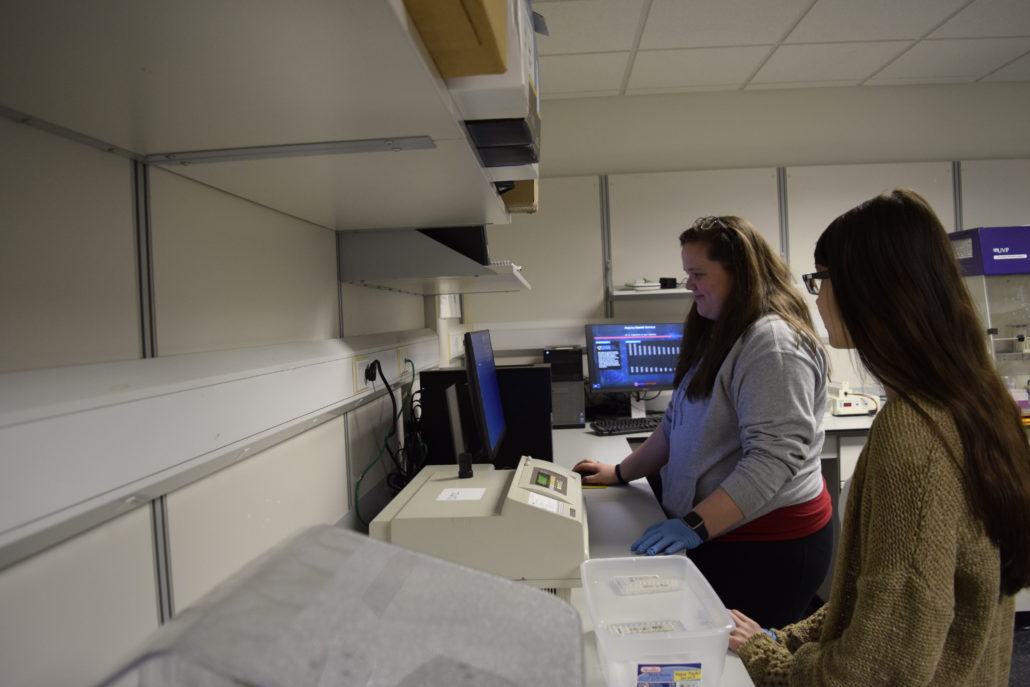
Faculty And Student Accomplishments
Our chemistry students choose to do laboratory research or do an REU at another institution. Our faculty are active in research and work closely with students to prepare them for their post-graduation career options. Students also present at conferences as well publish in peer-reviewed journals.

Recent Publications
Bold indicates LSSU faculty.
Italics denotes LSSU undergraduate student.
- Fiolek, T.; Magyar, C. L.; Wall, T. J.; Davies, S. B.; Campbell, M. V.; Savich, C. J.; Tepe, J. J.; Mosey, R. A. Dihydroquinazolines Enhance 20S Proteasome Activity and Induce Degradation of α-Synuclein, an Intrinsically Disordered Protein Associated with Neurodegeneration. Bioorg. Med. Chem. Lett. 2021, in press.
- Campbell, M. V.; Iretskii, A. V.; Mosey, R. A. One-Pot Tandem Assembly of Amides, Amines, and Ketones: Synthesis of C4-Quaternary 3,4- and 1,4-Dihydroquinazolines J. Org. Chem.2020, 85, 11211-11225.
- Kurtikyan, T. S., Hayrapetyan,V. A., Hovhannisyan, A. A., Martirosyan, G. G., Hovhannisyan, G. S., Iretskii, A. V., and Ford, P. C. Nitric Oxide Dioxygenation by O2 Adducts of Manganese Porphyrins. Inorg. Chem. 2020, 59, 17224-17233 .
- Lane, M.J, Rediske, R.R, McNair, J.N, Briggs, S, Rhodes, G, Dreelin, E, Sivy, T, Flood, M, Brian Scull, Szlag, D, Southwell, B.J, Isaacs, N.M, Pike, S., A comparison of E. coli concentration estimates quantified by the EPA and a Michigan laboratory network using EPA Draft Method C, Journal of Microbiological Methods, 2020, 179.
- Magyar, C. L.; Wall, T. J.; Davies, S. B.; Campbell, M. V.; Barna, H. A.; Smith, S. R.; Savich, C. J.; Mosey, R. A. Triflic Anhydride Mediated Synthesis of 3,4-Dihydroquinazolines: A Three-Component One-Pot Tandem Procedure. Org. Biomol. Chem. 2019, 17, 7995-8000.
Article highlighted in Synfacts, 2019, 15, 1238 - Aw, T.G, Sivaganesan, M., Briggs, S., Dreelin, E., Aslan, A., Dorevitch, S, Shrestha, A., Isaacs, N, Kinzelman, J., Kleinheinz, G., Noble, R., Rediske, R., Scull, B., Rosenberg, S., Weberman, B., Sivy, T., Southwell, B.J, Siefring, S., Oshima, K., Haugland, R. Evaluation of multiple laboratory performance and variability in analysis of recreational freshwaters by a rapid Escherichia coli qPCR method (Draft Method C), Water Research, 2019, 156, 465-474.
- Sivaganesan, M, Aw, T.G., Briggs, S., Dreelin, E., Aslan, A., Dorevitch, S., Shrestha, A., Isaacs, Kinzelman, J., Kleinheinz, G., Noble, R., Rediske, R., Scull, B., Rosenberg, S., Weberman, B., Sivy, T., Southwell, B.J, Siefring, S., Oshima, K., Haugland, R. Standardized data quality acceptance criteria for a rapid Escherichia coli qPCR method (Draft Method C) for water quality monitoring at recreational beaches, Water Research, 2019, 156, 456-464.

Recent Presentations
Bold indicates LSSU faculty.
Italics denotes LSSU undergraduate student.
- Webber, D., Wickens, J., Werner, R. M. Cloning of the oprin gene from the North American opossum (Didelphis virginiana) as a potential inhibitor of Western diamondback rattlesnake (C. atrox) venom metalloproteinases. Poster Presentation, Upper Peninsula American Chemical Society Student Research Symposium, Northern Michigan University, Marquette, MI, March 25, 2017.
- Wall, T.; Magyar, C.; Hutchens, M.; Mosey, R. A. “Expanding Diversity About the 3,4-Dihydroquinazoline Scaffold: Gaining Access to an Emerging Class of Antimicrobial Compounds” Poster Presentation, Upper Peninsula American Chemical Society Student Research Symposium, Northern Michigan University, Marquette, MI, March 25, 2017.
- Magyar, C.; Wall, T.; Mosey, R. A. “Development of a Multicomponent Synthesis of Diverse 3,4-Dihydroquinazolines” Poster Presentation, Upper Peninsula American Chemical Society Student Research Symposium, Northern Michigan University, Marquette, MI, March 25, 2017.
- Mosey, R. A. “Partially Saturated Amidine-Containing Heterocycles: Synthesis and Pharmaceutical Applications” Invited Presentation, Northern Michigan University, Marquette, MI, February 20, 2017.
- Hubbell, G. E.; Ellsworth, A. A.; Iretski, A. V.; Mosey, R. A. “Diastereoselective Formation of Bicyclic Annulation Products from the Interaction of 2-Imidazolines with Serine Derivatives” Poster Presentation, West Michigan Regional Undergraduate Science Research Conference, Van Andel Institute, Grand Rapids, MI, November 5, 2016.
- Korcal, K.; Wall, T.; Magyar, C.; Mosey, R. A.; Hutchens, M. “Biofilm Inhibition and Destruction Using Newly Synthesized Compounds” Poster Presentation, Michigan Branch of the American Society for Microbiology, Lake Superior State University, Sault Sainte Marie, MI, October 22, 2016.
- Hutchens, M.; Magyar, C.; Wall, Tyler; Mosey, R. A. “Anti-Staphylococcal Activity of 3,4- Dihydroquinazolines” Poster Presentation, Michigan Branch of the American Society for Microbiology, Lake Superior State University, Sault Sainte Marie, MI, October 22, 2016.
- Hubbell, G. E.**; Ellsworth, A. A.**; Iretskii, A. V.; Mosey, R. A. “Diastereoselective Formation of Bicyclic Annulation Products from the Interaction of Amino Acid Derivatives and 2-Imidazolines” Poster Presentation, Upper Peninsula American Chemical Society Student Research Symposium, Northern Michigan University, Marquette, MI, April 2, 2016.
- Werner, R. M. Adventures in carbon-carbon bond formation: From diazomethane to chiral auxiliaries. Grand Valley State University, December 8, 2016.
- Ford, P. C., Bernt, C., Chui, M., Jones, Z., Scott, S., Bottari, G., Barta, K., Maneesuwan, H., Brunner, F., Iretski, A. V. Studies of the reductive disassembly of lignocellulose to value-added chemicals. 249 th ACS National Meeting, Denver, CO, March 22-26, 2015.
- Ellsworth, A. A.; Theisen, C. C.; Mosey, R. A. “Direct Conversion of Amides to 1,2-Disubstituted 2-Imidazolines” Poster Presentation, Upper Peninsula American Chemical Society Student Research Symposium, Northern Michigan University, Marquette, MI, April 11, 2015.
- Ellsworth, A. A.; Theisen, C. C.; Mosey, R. A. “Multicomponent Reaction to Produce Diversely Substituted 2-Imidazolines” Poster Presentation, 249 th ACS National Meeting, Denver, CO, March 23, 2015.
- Ellsworth, A. A.; Mosey, R. A. “Multicomponent Reaction to Produce Diversely Substituted 2-Imidazolines” Poster Presentation, Midwestern Symposium on Undergraduate Research in Chemistry, Michigan State University, East Lansing, MI, October 11, 2014.
- Gravatt, C. S.; Mosey, R. A. “The Synthesis of a Novel Self-Immolative Lysine-Based Surfactant” Poster Presentation, Upper Peninsula American Chemical Society Student Research Symposium, Northern Michigan University, Marquette, MI, March 29, 2014.
- Ellsworth, A. A.; Mosey, R. A. “Imidazoline Synthesis to Investigate the Extent of Heterocycle-Biomolecule Complex Formation” Poster Presentation, Upper Peninsula American Chemical Society Student Research Symposium, Northern Michigan University, Marquette, MI, March 29, 2014.
- Werner, R. M. Hands-on NMR activities for undergraduates. Bi-annual Conference of Chemical Educators (BCCE) National Conference, Grand Valley State University, August 3, 2014.
- Chui, M., Hamann, D. M., Tran, T., Brunner, F.M., Iretski, A.V., Boscolo, M., Scott, S.L., Ford, P.C. Tuning the reductive disassembly of lignocellulosic biomass and model compounds using doped porous metal oxides. 248 th ACS National Meeting, San Francisco, CA, August 10-14, 2014.
- Ford, P. C., Barta, K., Iretski, A.V., Scott, S.L. Studies of the reductive disassembly of lignin and lignocellulose using Earth-abundant catalysts. 248 th ACS National Meeting, San Francisco, CA, August 10-14, 2014.
- Gravatt, C. S.; Mosey, R. A. “Mobilization of Petroleum Hydrocarbons in Soil: Progress Towards the Synthesis and Property Characterization of a Novel Self-Immolative Lysine-Based Surfactant” Oral Presentation, 23 rd Annual Argonne Symposium, Lemont, IL, November 1, 2013.
- Barta, K., Matson, T.D., Iretski, A.V., Ford, P. C. One-Pot Catalytic Conversion of Organosolv Lignin, Cellulose and of Woody Biomass to Liquid Fuels. Frontiers in Chemistry, Armenia, August 25-29, 2013.
- Hamann, D. M., Chui, M., Iretski, A.V., Ford, P. C. Valorization of Biomass Using Porous Metal Oxide (PMO) Catalysts. Midwestern Symposium on Undergraduate Research in Chemistry, Lansing MI, October 2013.

Active Funding
- 2020 – 2021: Pilot Scale Evaluation of Digital PCR for the Detection of SARS COV2 in Wastewater, Michigan Department of Environment, Great Lakes, and Energy.
- 2020 – 2023: Hemp Tribal Research Initiative for Michigan (Hemp TRIM), National Institute of Food & Agriculture, USDA
- 2018 – 2021: qPCR Methods for Beaches, Michigan Department of Environmental Quality
- 2016 – 2019: “MRI: Acquisition of a 400 MHz NMR Spectrometer for Use in Research and Research Training,” National Science Foundation, Major Research Instrumentation Award.
- 2015 – 2025: Cyanotoxin Monitoring Intergovernmental Agreement, Oregon Department of Environmental Quality
- 2013 – 2014: Cyanotoxin Monitoring Intergovernmental Agreement, Oregon Health Authority.
- 2012 – Present: Tribal Water Quality Monitoring, Bay Mills Indian Community
- 2012 – Present: Tribal Water Quality Monitoring, Sault Ste Marie Tribe of Chippewa Indians
- 2012 – Present: Chippewa County Michigan Beach Water Quality Monitoring, Chippewa County Health Department